
We recommend watching / reading the article How to get started (in less than 5 minutes) first.
This article will provide some additional detail later should you require it after the initial setup.
To get started using the Job management just follow these simple steps:
These can be completed in a few minutes to get you started and can always be added / edited later if needed. There are a whole heap of other options available, if you need them, but at least these will get you started quickly with a minimum amount of fuss.
Job Management set up
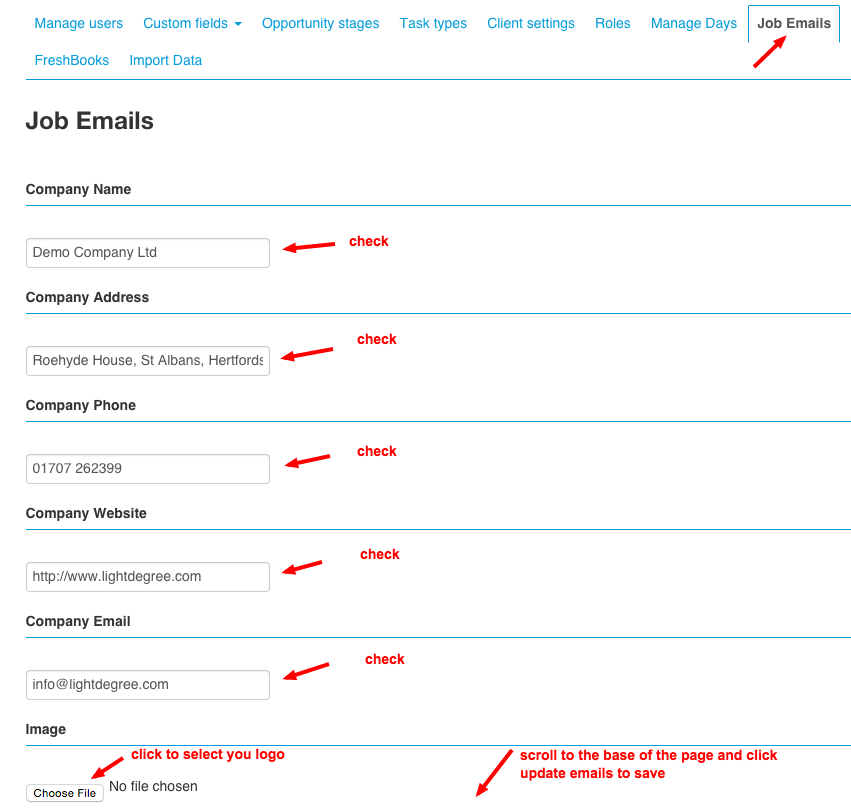
1. Update job emails settings
(click on your name at the top right and select Admin system, then Job Emails)
1.1 Check that your company name / address / phone / email address and website are correct
1.2 Upload your logo (click on choose file)
1.3 Scroll to the bottom of the page and click on Update Job Emails
If you want to see examples of the different types of emails see Job emails
2. Job types
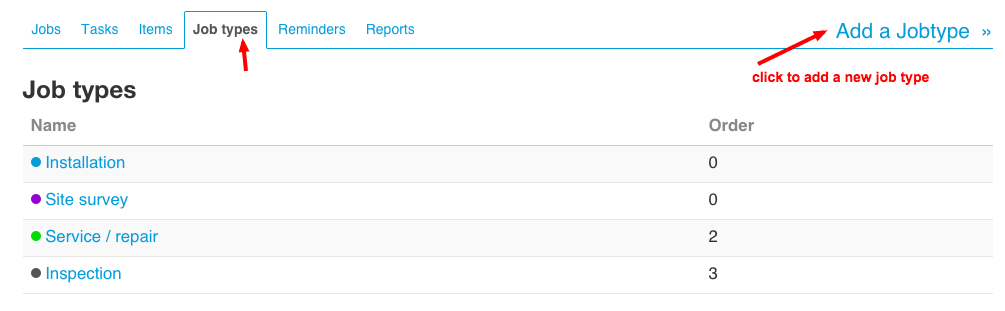
(Click on Jobs - in the top menu, then Job types in the secondary menu)
2.1 Click on Add a Job type
2.2 Give it a name (example: Installation / Repair / Maintenance - really the types of jobs you do NOT the specific jobs, just types of jobs Actual job details will come next)
2.3 You can decide the order these will display in the dropdown menu / select a colour
2.4 Save job type (then add some more, although you can add these at any time)
Add a job type

3. Tasks (Standard tasks)
(Click on Jobs - in the top menu, then Tasks in the secondary menu)
This article relates to standard tasks (or repetitive tasks).
If you just want to add One off tasks (or ad hoc tasks) you do not need to use the standard tasks for that as these can simply be added when are adding a job.
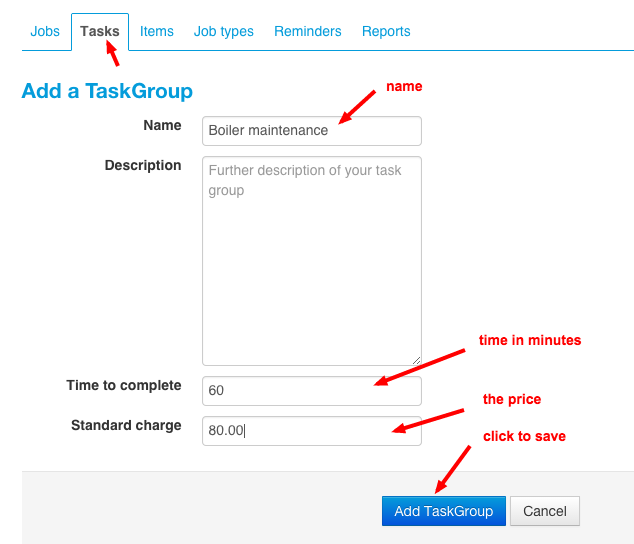
3.1 Click on Add a Task and
3.2 Give it a name (example Boiler inspection)
3.3 Enter a detailed description (optional) here
3.4 Enter the usual time it should take to complete the job
3.5 Enter your standard charge (the charge before tax)
3.6 Click Add TaskGroup
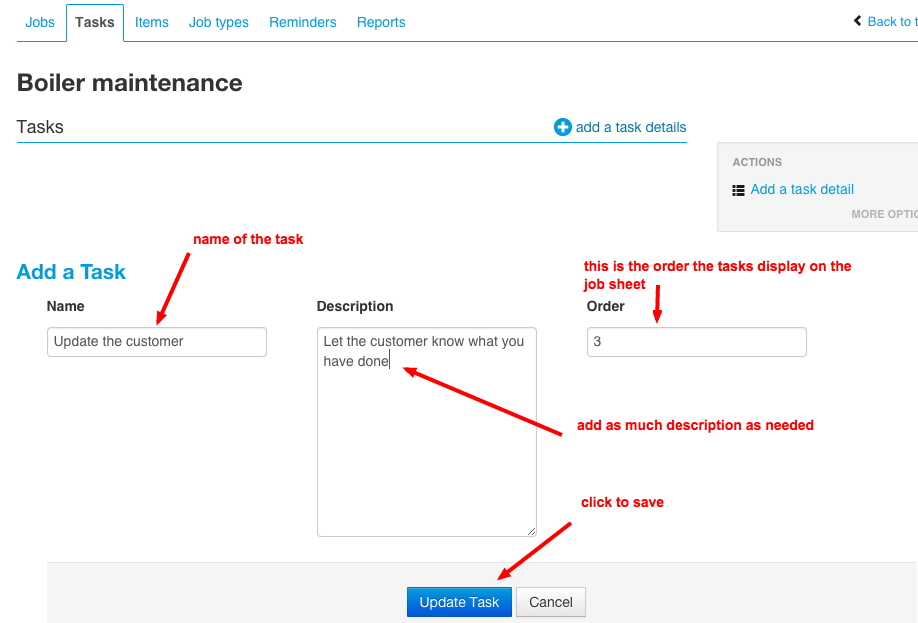
3.7 now click on + add a task detail (These are the steps or processes that you need to do the job example: The steps might include
- Visual inspection (add as much detail as you need into the description)
- Check results
- Fix the issue
- Explain to your client what you have done
Add each of the steps with descriptions
You can add more tasks / steps in a task directly from when booking a job as well, so no need to add these all now
Now click to add the detailed tasks (steps to complete the job)
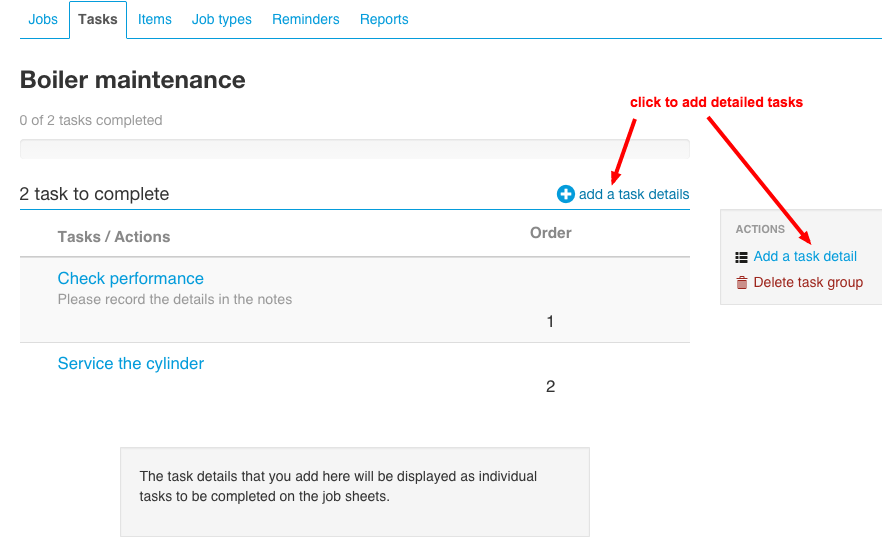
Add the task detail. Add this for each step required to complete the job. Then click update task to save. Add more tasks (steps) as required.
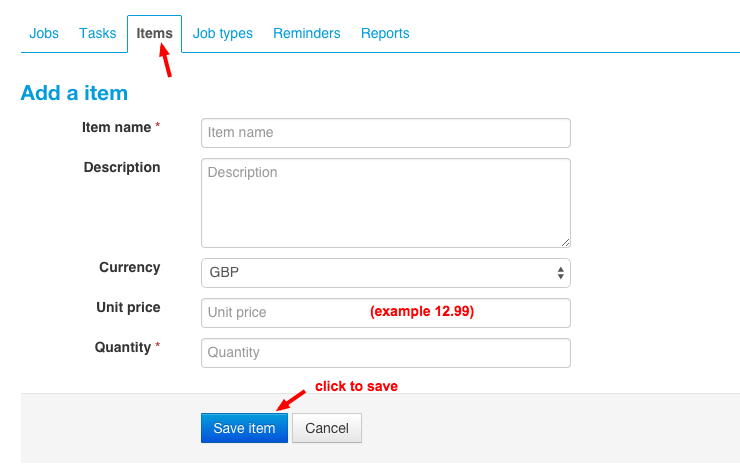
4. Items (stock used on the job)
(Click on Jobs - in the top menu, then Items in the secondary menu)
4.1 Add each item that you will use on a job/s
4.2 The description will be displayed on invoices
4.3 Add the sale price (before tax)
4.4 Add the number (usually 1)
4.5 Click Save item (add more later as needed)
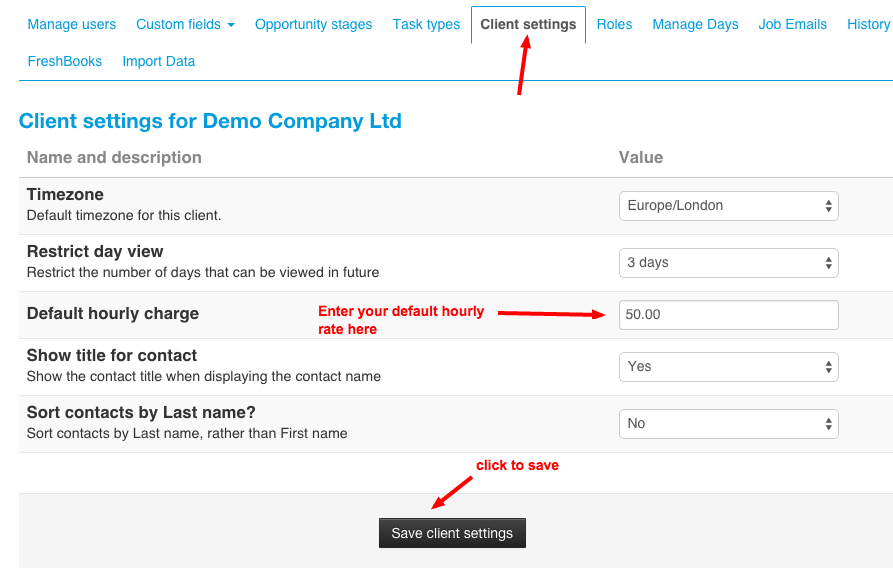
5. Client settings
(click on your name at the top right and select Admin system, then Client Settings)
5.1 Add your default hourly charge (used for preparing estimates, in the format 50.00)
5.2 Click save client settings
6. Forms
(if you need plumbing and gas forms go here otherwise skip next to 7)
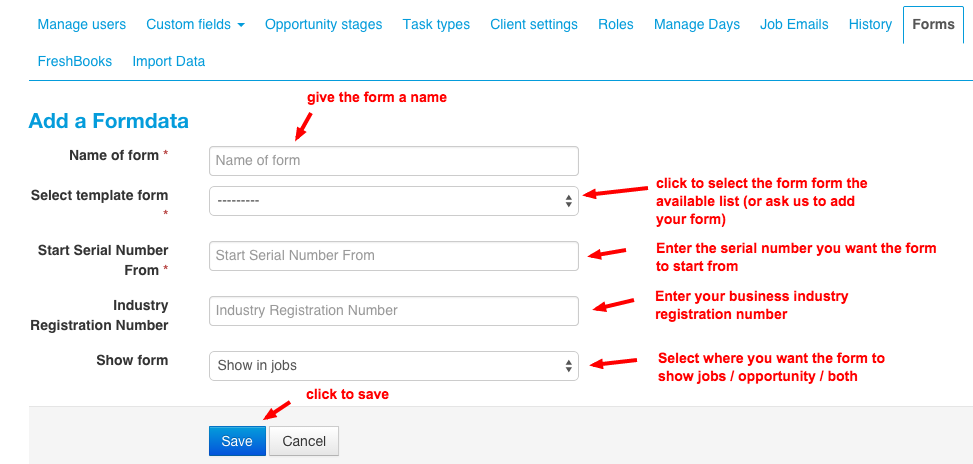
6.1 Click on forms (still in Admin system) and click on Add a Form Name
6.2 Give the form a name
6.3 Select the form form the dropdown list
6.4 If you already use serial number add the next number here (or just start at a random number)
6.5 If you have an industry registration number for your business, add it here
6.6 Save
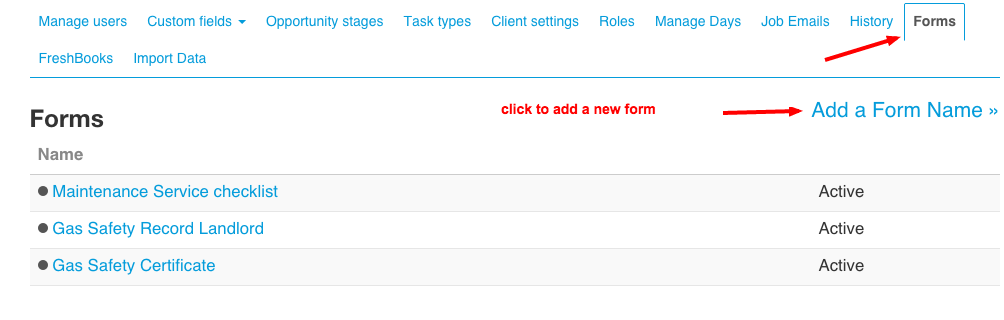
Add the form
CRM Set up
(this takes about 2 - 5 minutes)
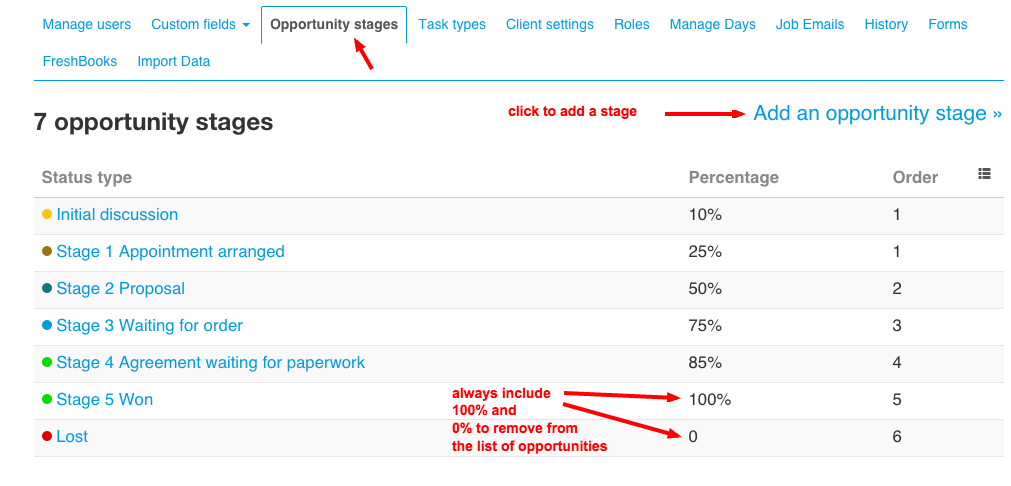
1. Opportunity stages
(this also covers estimates and quotes - click on your name at the top right and select Admin system, then Opportunity stages)
1.1 Click on Add an opportunity stage
1.2 Give it a name
1.3 Add the percentage (this is the likelihood of getting the job or getting an order)
examples:
Appointment arranged 10%
Estimate / quote sent 50%
Success (Won) 100% (100% will mark as completed and hide the opportunity)
Lost 0% (0% will hide the opportunity)
1.4 Set the order and select a colour
1.5 Click Add stage
2. Task types
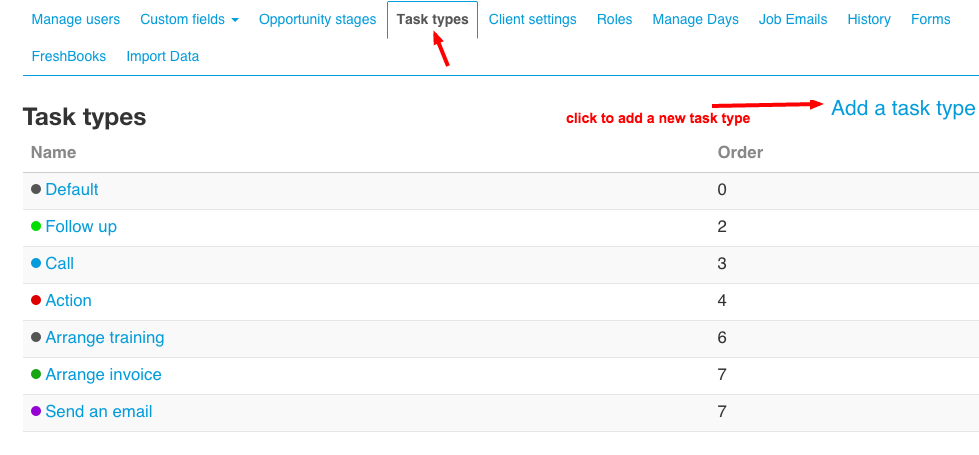
(click on your name at the top right and select Admin system, then Task types)
2.1 These are task that you can assign to someone or for you. Click on add a task type
2.2 Give it a name examples: Send an email / Call / Follow up / Do
2.3 Choose a colour
2.4 Save task type
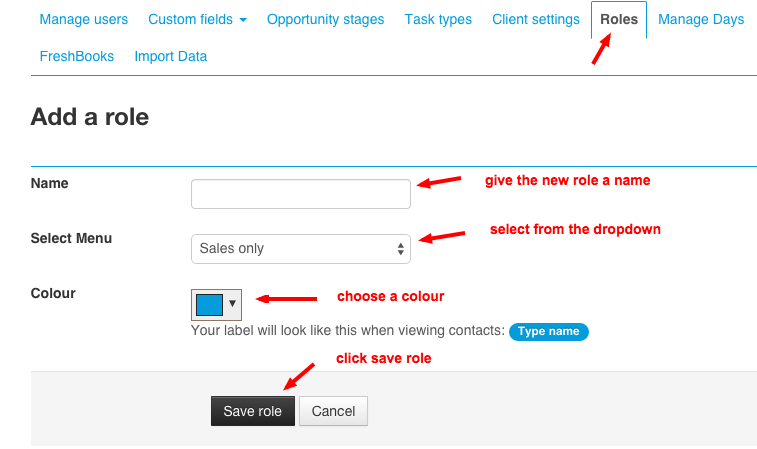
3. Roles
(click on your name at the top right and select Admin system, then Roles)
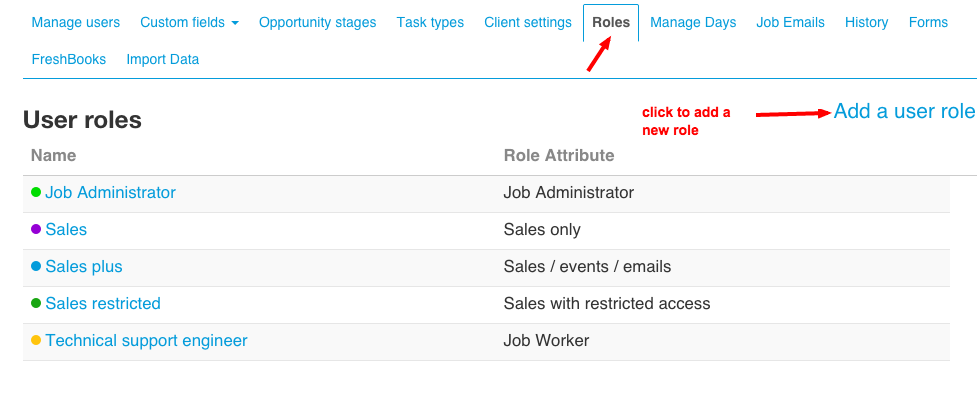
3.1 These are required to add new users. They decide which menus everyone will see. It's quite simple: just click Add a user role
3.2 Give it a name: example: Engineer Technician or Sales
3.3 Then select from the menu. The menu depends on what you want this user to be able to do:
- Job Administrator: You will always require at least one user with the Job Administrator role. This person creates and manages the jobs. You can also assign jobs to these users.
- Job Worker: You can assign jobs to these users.
- Sales only: This user can access contacts and companies (They do not have access to job bookings)
- Sales / events / emails: This user is the same as sales only plus they can access events and emails (They do not have access to job bookings)
- Sales with restricted access: These users can only see contacts who are assigned to them. They also have restricted access to see only tasks assigned to them / Opportunities assigned to them. They also see Documents.
Add a new role
4. Manage users
(click on your name at the top right and select Admin system, then Roles)
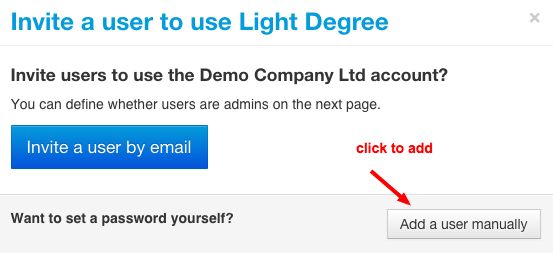
4.1 Click on Add a user then Add a user manually
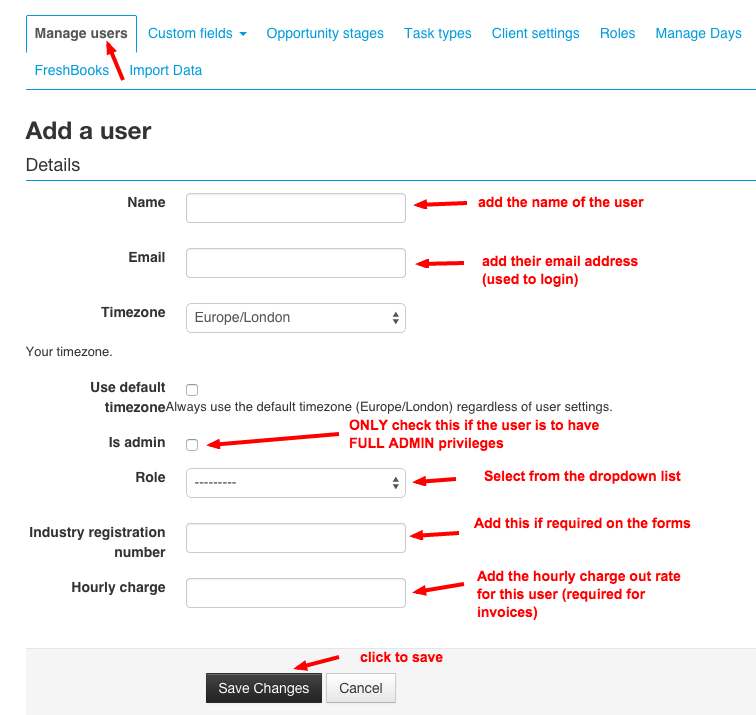
4.2 Add their name / email address
4.3 Select their role (see roles above)
4.4 Add their hourly charge out rate (if using job management)
4.5 Click Save changes (add some more users)
Click on Add a user
Add their details
Now set a temporary password so the user can login (click on change password)
5. Contacts
(click on contacts in the top menu)
Now it's time to add some contacts and enjoy using the CRM.
WELL DONE
YOU HAVE DONE A GREAT JOB
See also job management - add a job
Comments